Understanding basic cigar terms
Wrapper, binder and filler
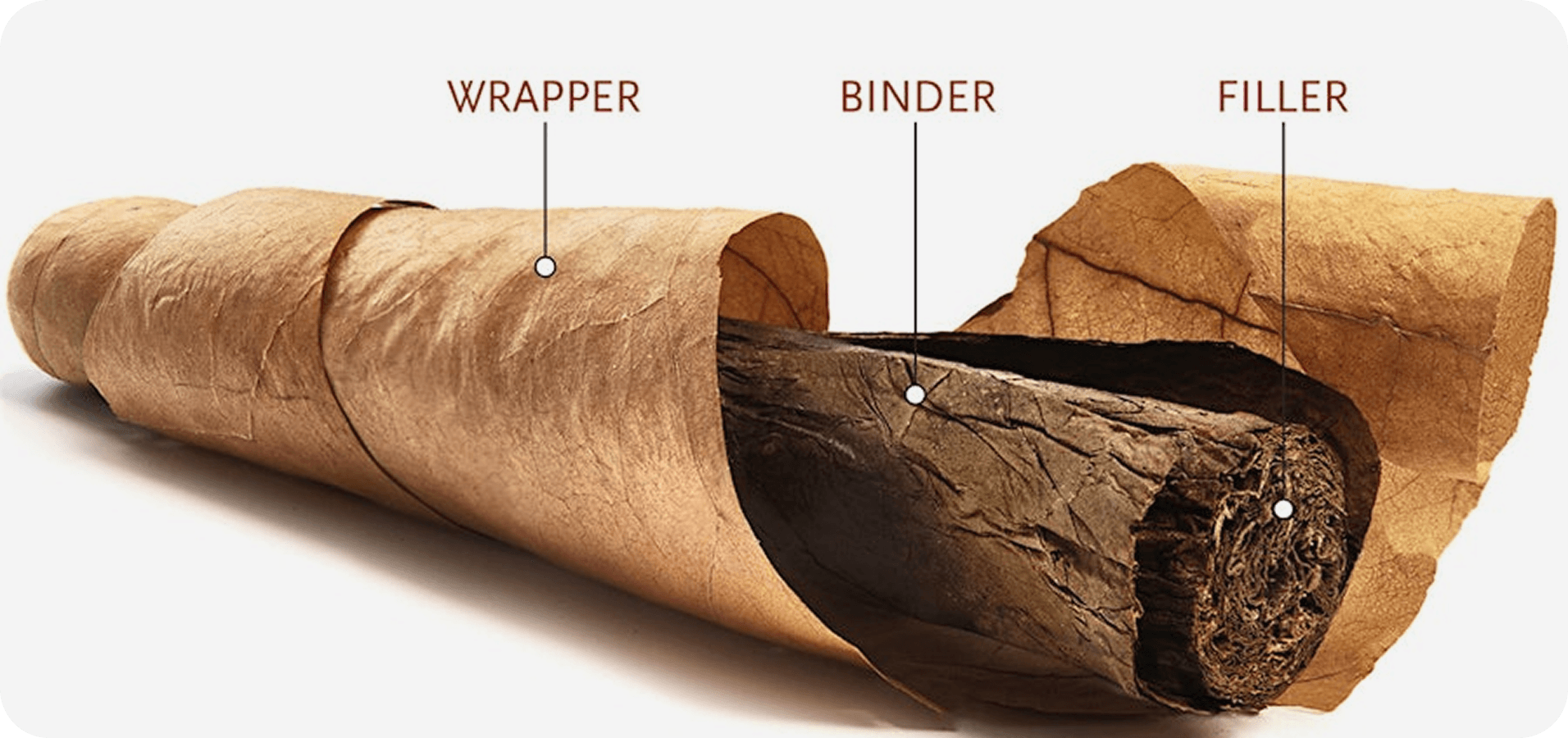
A cigar consists of three essential components that work together in perfect harmony:
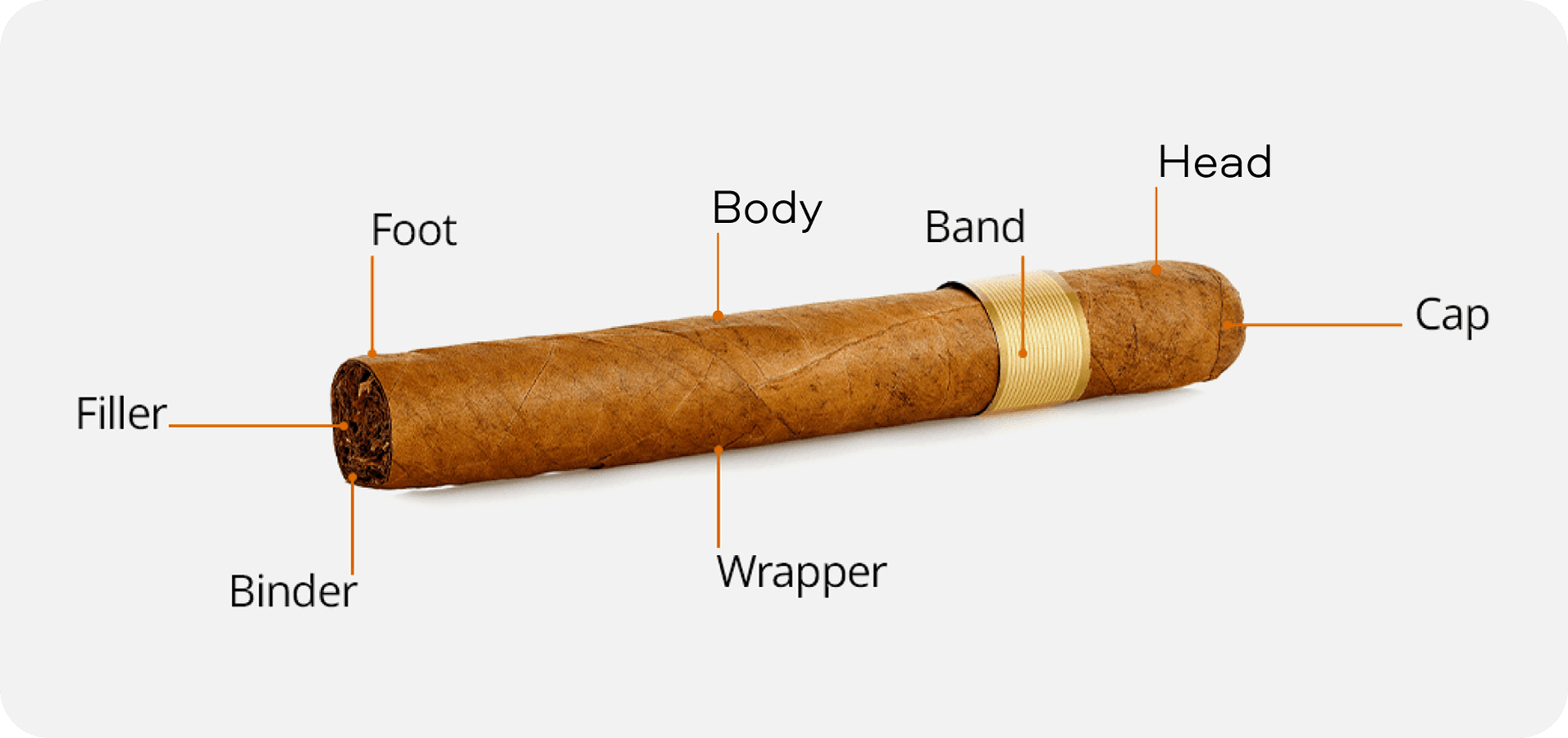
- Wrapper – serves as the outer leaf that creates the initial impression through scent and visual appearance. The wrapper leaf requires careful selection because it determines the entire cigar experience through its aroma and visual appeal.
- Binder – functions as a strong leaf that maintains the cigar’s structure and determines its shape.
- Filler – contains various tobacco leaves that make up the core of the cigar. The cigar develops its body, flavour, and strength from the tobacco leaves that fill its interior.
Ring gauge, size and length explained
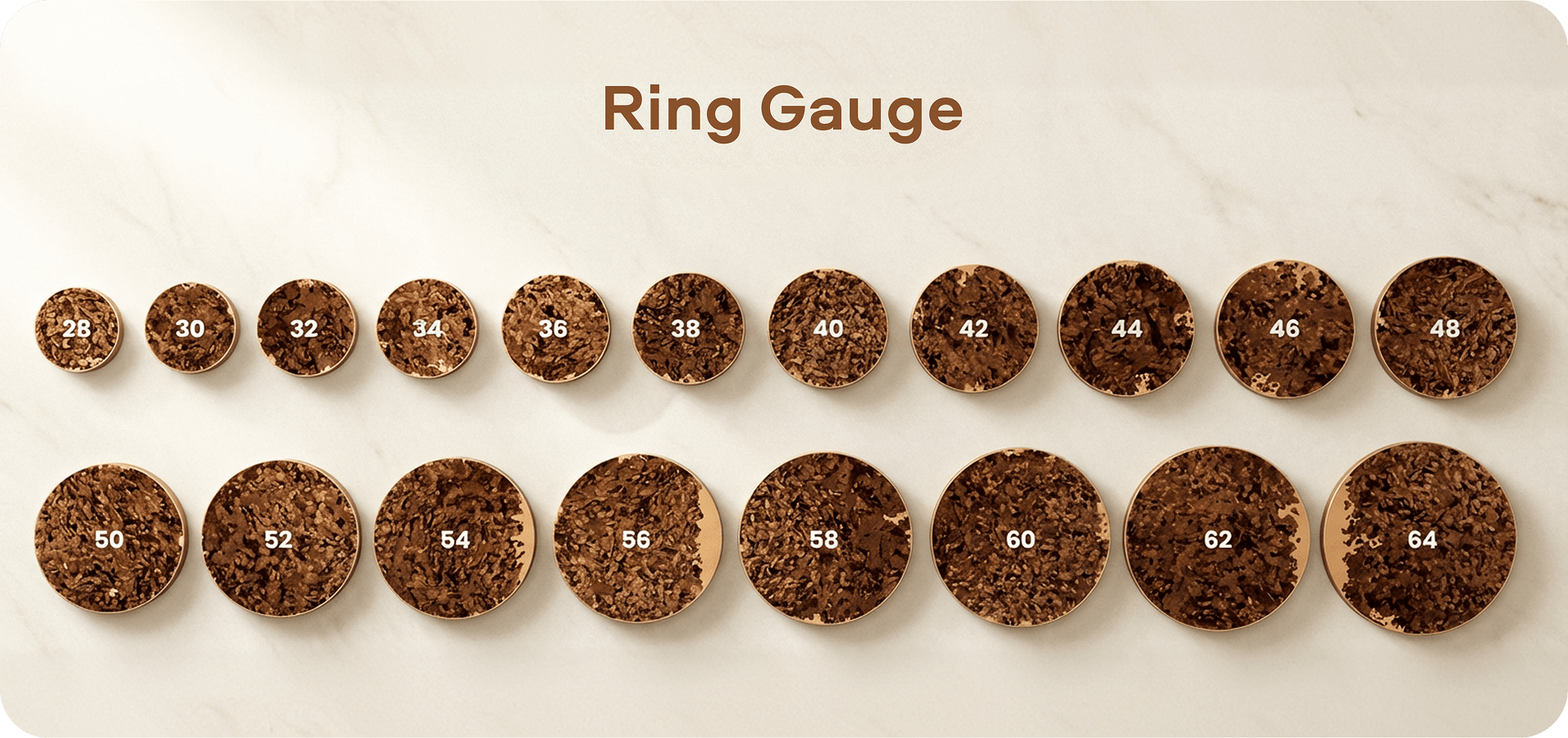
Two numbers in a cigar description reveal its complete character through its ring gauge measurement and size dimensions.
- Ring gauge – measured in sixty-fourths of an inch to determine cigar thickness (for example, a 50-ring cigar measures approximately 2 cm in diameter).
- Length – measured in inches, it determines how the cigar will affect both flavour strength and smoking time.
Anatomy of the cigar
Head, foot and body
Every cigar consists of three distinct sections:
- Head – the closed end, which requires cutting before smoking.
- Foot – the open end that requires lighting.
- Body – contains all the leaves that unite to create the flavour and aroma experience.
- Cap – a small tobacco leaf that protects the head from unraveling.
- Band – a decorative ring that displays the manufacturer’s name or logo.
- Wrapper finish – may appear smooth, oily, or silky, indicating the level of care during the rolling process and storage period.
Cigars lack filters like cigarettes do, so each tobacco draw delivers pure, unfiltered craftsmanship to the smoker.
Common manufacturing and blending terms
Liga, ligero and mariado
- The tobacco blend in a cigar, known as Liga, determines the distinctive taste profile of each brand.
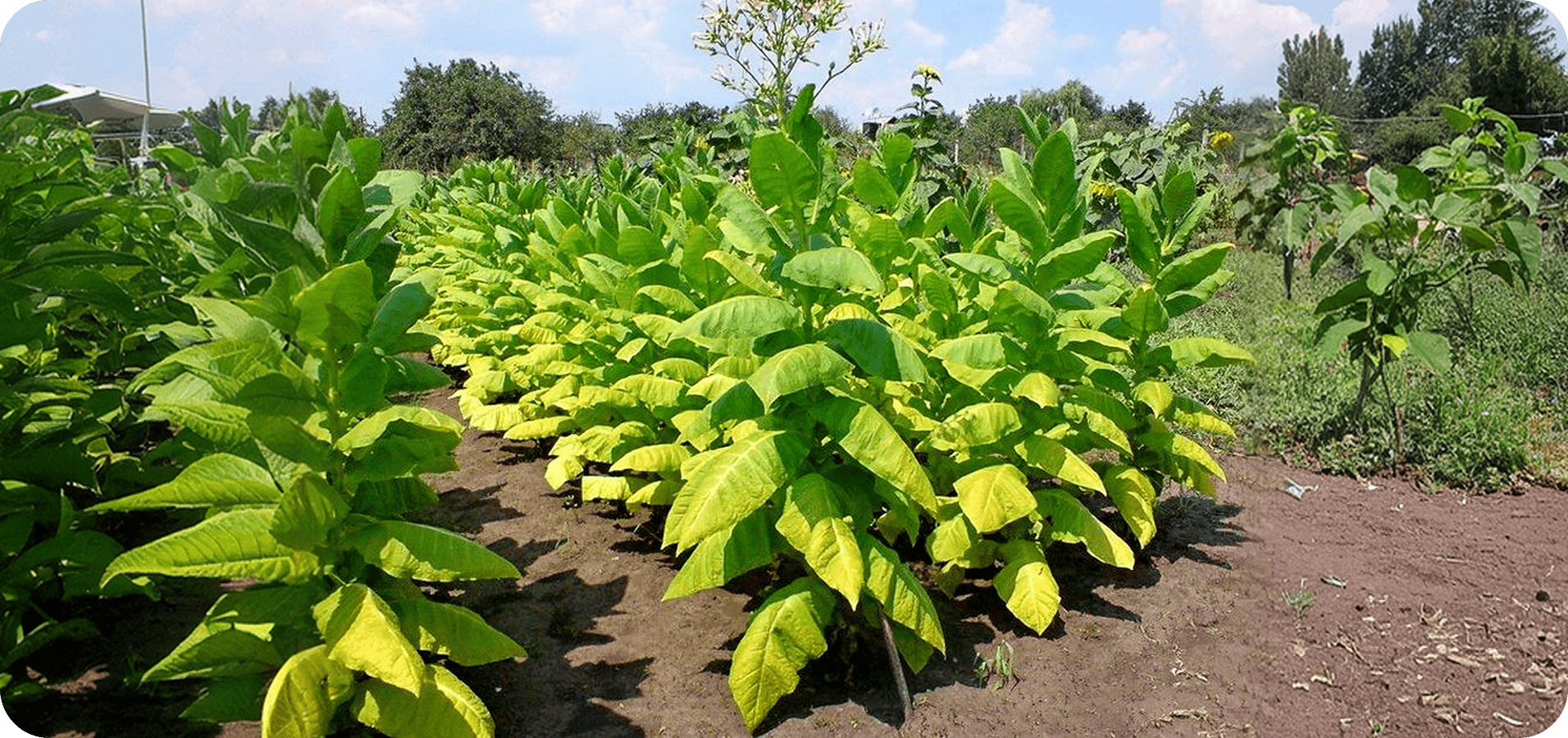
- Ligero tobacco leaves, which grow near the top of the plant, contain more oils and strength, creating a full-bodied and bold cigar flavour.
- The mariado process involves a gentle leaf blending technique that achieves equal moisture levels throughout the tobacco leaves before production.
Fermentation, aging and harvest
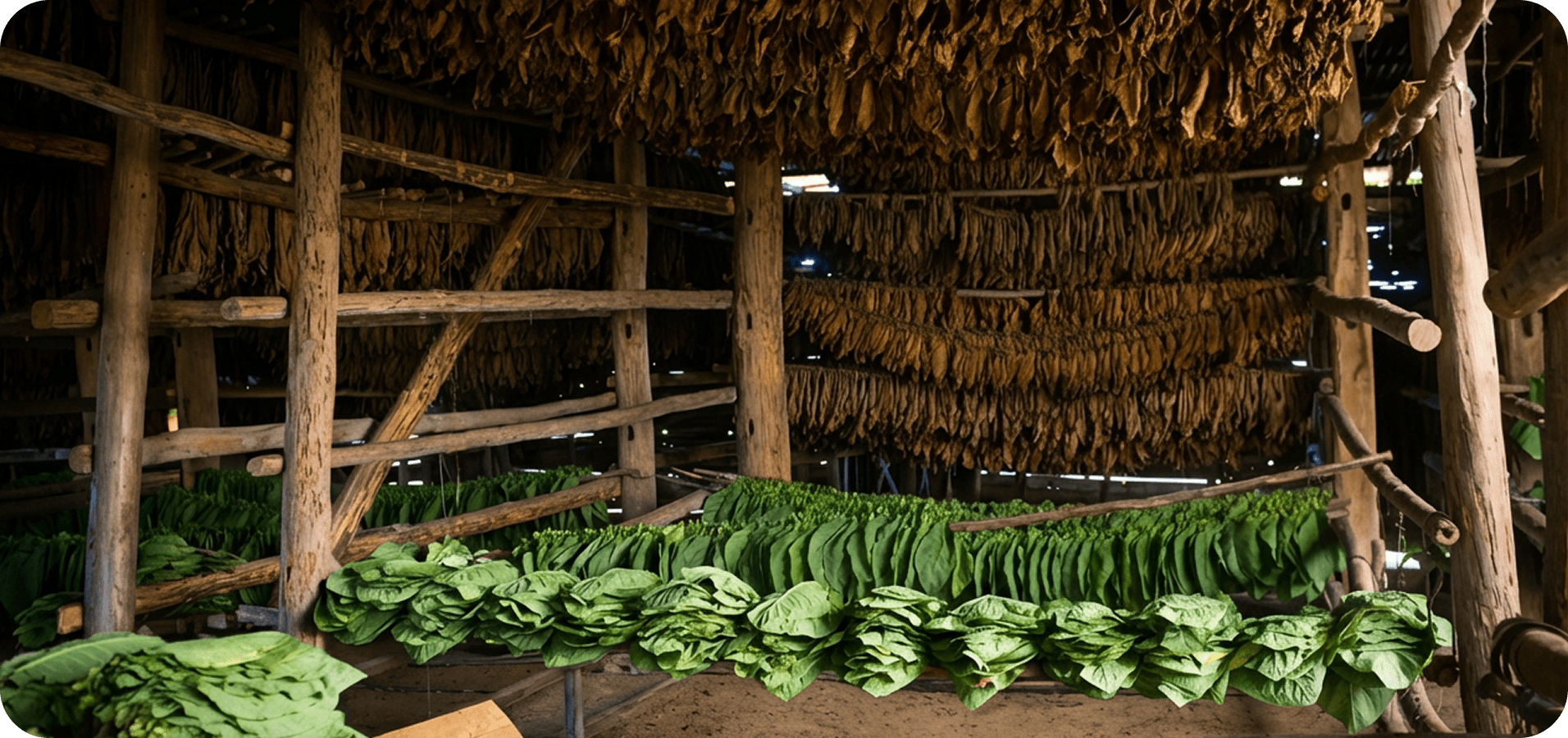
- The process of fermentation transforms raw tobacco into aromatic and rich products through heat and time.
- The aging process allows leaves and finished cigars to develop their flavours while reducing harsh notes.
- The quality of tobacco leaves, together with their aroma and texture, depends on the time of harvest.
Key storage and smoking terms
Humidor, hygrometer and humidity
Cigars are living things — they breathe, age, and react to their surroundings.
- The humidor serves as the storage space that maintains optimal conditions for cigar preservation.
- The hygrometer functions as a device that measures humidity levels within the storage environment.
- The optimal storage environment for cigars should maintain 70% humidity at temperatures between 18–21°C (64–70°F).
A cigar may crack when stored too dry or burn unevenly when stored too humid. Correct storage methods help maintain the cigar’s flavour and aroma.
Draw, burn, ash and flavour profile
- The quality of smoke flow through the cigar depends on the draw resistance experienced when puffing.
- A perfect draw provides smooth airflow without restriction.
- The burn pattern reveals construction quality through its straight and even appearance.
- Ash should maintain its pale grey colour with firm texture, indicating proper tobacco curing.
- The unique flavour profile of a cigar serves as its signature, combining nutty, woody, earthy, sweet, and spicy notes.

Shapes and formats you will hear about
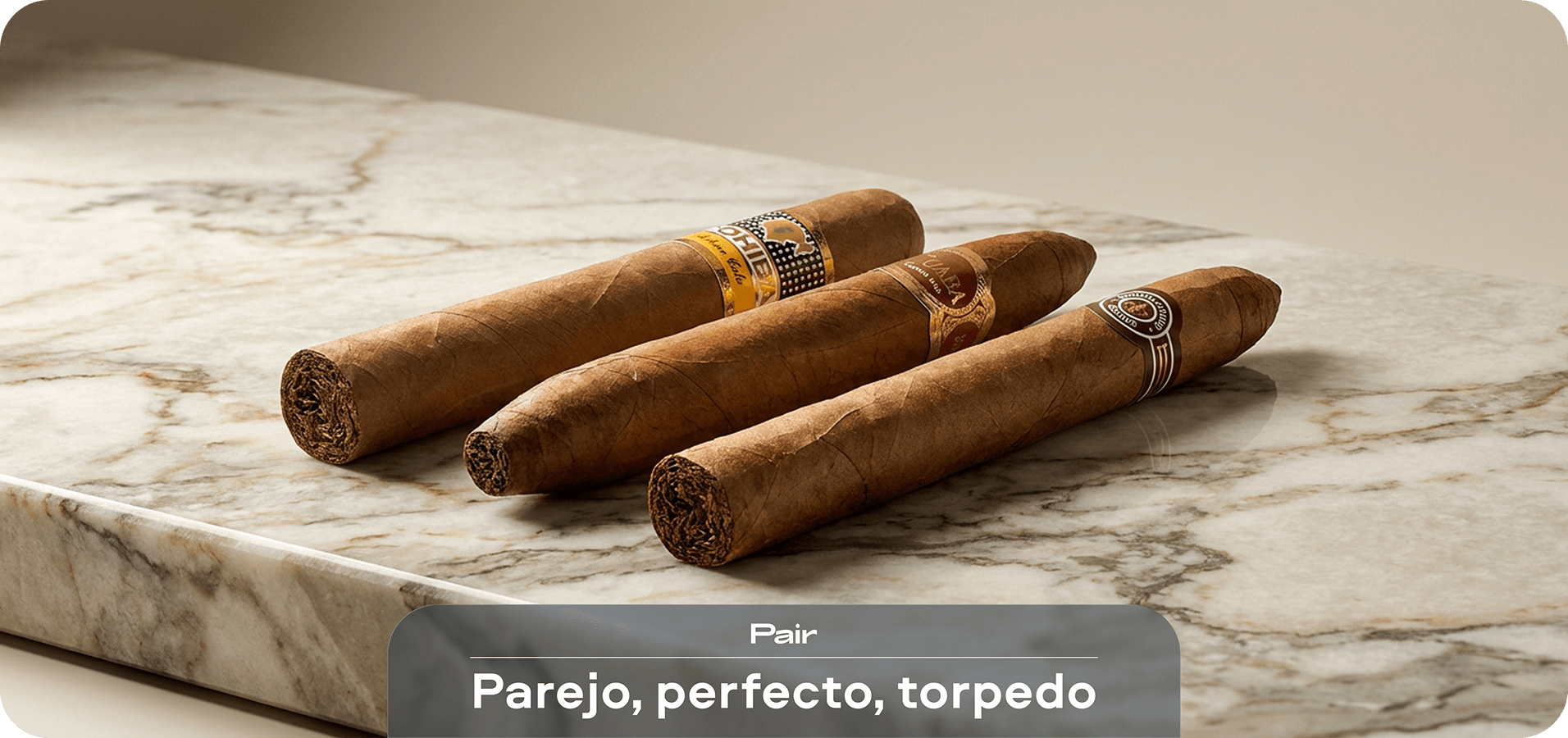
The term vitola in cigar terminology refers to the specific shape and size of a cigar. Different vitolas provide smokers with unique experiences through their draw quality, burn performance, and flavour delivery.
Parejo, perfecto, torpedo
- Parejo – a traditional straight-sided cigar design with timeless appeal.
- Perfecto – features tapered ends and a thicker centre section that produces shifting flavour experiences.
- Torpedo – features a pointed head that enhances aroma delivery and produces a more intense smoking experience.
Pair recommend
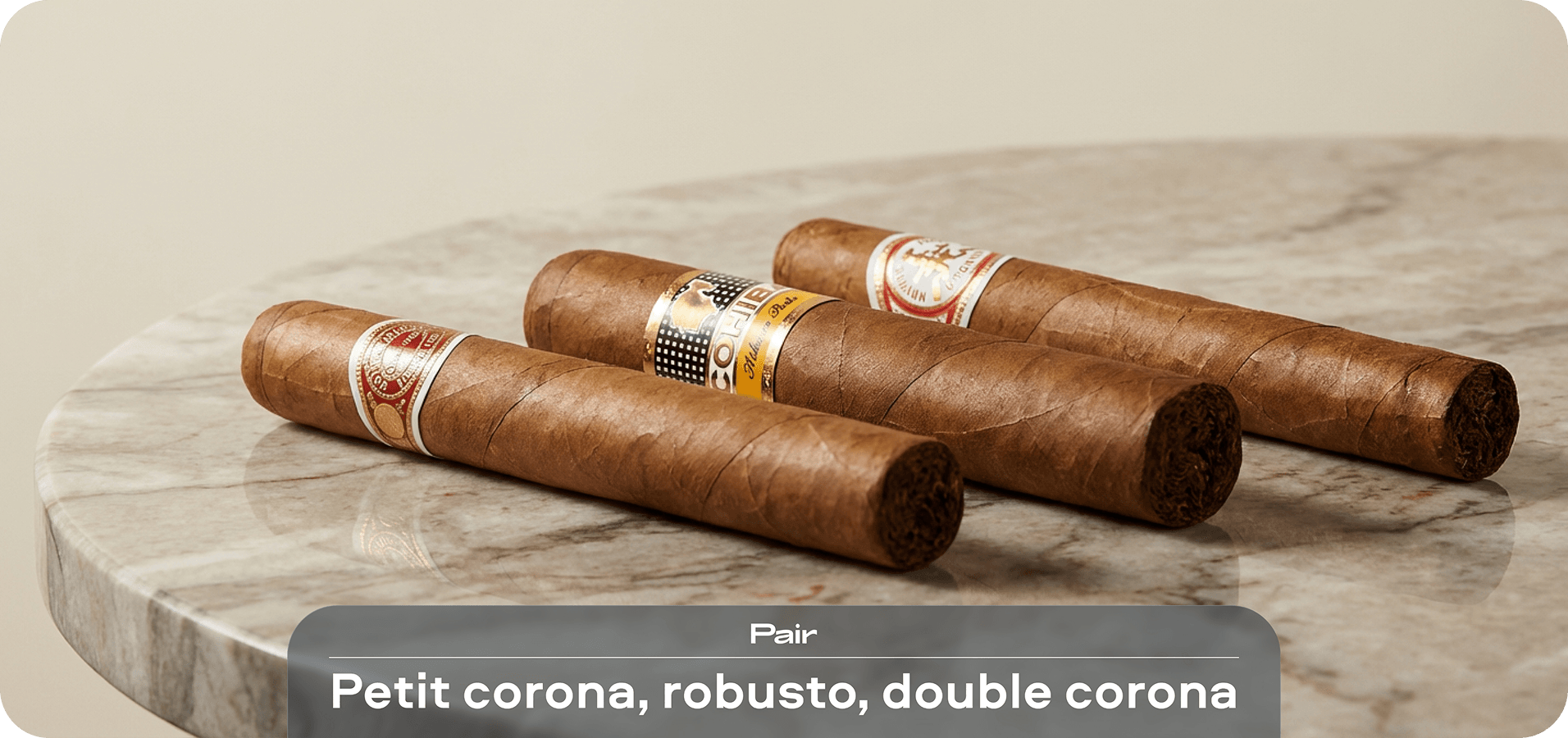
Petit corona, robusto, double corona
- Petit corona – provides a rich flavour experience through its short size, measuring about 4.5 inches.
- Robusto – has become popular among modern smokers because it offers balanced flavours and a comfortable smoking time.
- Double corona – extends to 7.5 inches in length and 49 ring gauge to deliver a prolonged smoking experience that highlights full body and character.
Pair recommend
Terms that set apart the aficionado
Vintage, limited edition, front-mark
- Vintage cigars use tobacco from particular harvest years that undergo aging to achieve full flavour potential.
- Limited edition cigars honour special occasions and events through restricted production runs.
- Front-mark represents the specific name a brand line uses to identify its cigars, such as Montecristo No. 2 or Partagás Serie D No. 4.
How to use this glossary and keep learning
Developing your personal cigar terminology
The most effective learning method involves smoking cigars with intention. Record your cigar experiences by noting the details, flavour profile, and storage methods in a notebook or mobile app.
Your personal cigar glossary will develop over time as you record your preferences and discoveries. The ability to recognise cigars by their characteristics makes someone more than a smoker — it makes them a true aficionado.
Discover the best cigars today!