

The Life of a Cigar: Storage and Myths
A cigar is not just a tobacco product. It is a living product, in which natural processes continue to occur even after rolling. You must treat it accordingly: with understanding and respect. In this lesson, we will tell you how to create ideal conditions for a cigar, how to save it if something goes wrong, and, of course, we will debunk the most popular myths surrounding cigar culture.

Why a Cigar Needs Special Care
A cigar consists of fermented tobacco leaves. And as long as there is moisture in it, it lives, breathes, and even matures. Our main task is to maintain balance. If a cigar dries out, it dies: the flavor disappears, the wrapper leaf becomes brittle, starts to crack and crumble. Restoring such a cigar is practically impossible. If, on the contrary, a cigar is over-humidified, it swells, the draw becomes tight or disappears entirely, and the taste acquires a sourish tinge. But unlike a dry cigar, an over-humidified one can still be saved - by carefully drying it out.
The Golden Standard of Storage
The ideal conditions for a cigar have been established by decades of practice. This is a temperature in the range of 19 to 22 degrees Celsius and a relative air humidity of about 65–72 percent. Deviations in either direction trigger undesirable processes. For example, at temperatures above 25 degrees and high humidity, microorganisms begin to multiply, and mold appears on the cigar - a green or bluish coating that irrevocably spoils it. However, the appearance of white fuzz is also possible. This is so-called crystallization or "bloom." It is not mold, but a natural phenomenon that, on the contrary, indicates that the cigar is alive and properly aged.
How to Check the Condition of a Cigar and Restore It
You can determine if a cigar is in good condition with a simple tactile test. Squeeze it with force. If it quickly returns to its shape and no mark remains - the humidity is normal. If a dent remains - the cigar is over-humidified. If it does not bend and crackles - it is dried out.
You need to restore a cigar gradually, in small steps. You cannot put a dry cigar directly into ideal conditions - it may burst from a sharp change in humidity. First, place it in an environment with about 60 percent humidity, after a couple of days raise the humidity to 61–62 percent, and so, step by step, bring it to 70–72. Do exactly the same, only in reverse order, with an over-humidified cigar.
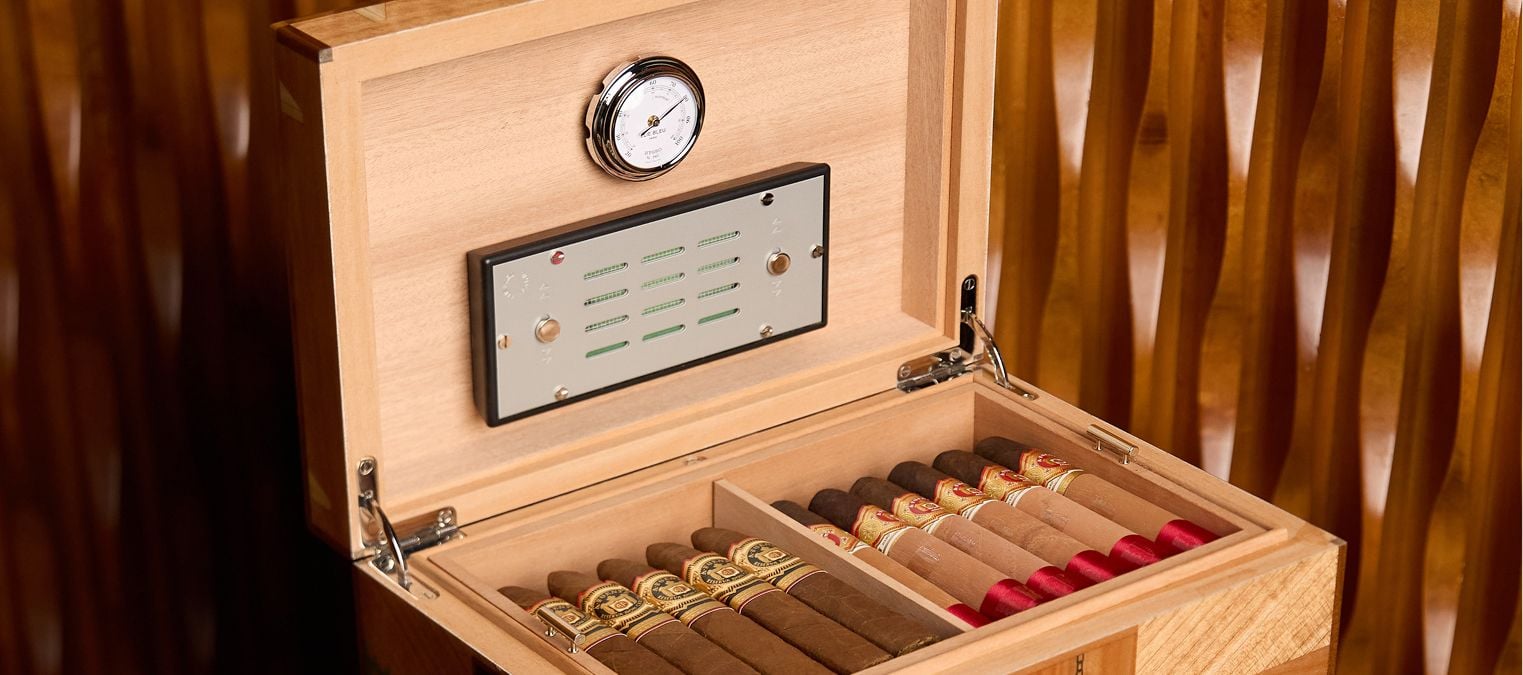
Hygrometer and thermometer — essential attributes of a proper humidor
What to Do If You Don't Have a Humidor
This situation is familiar to every beginner. If you need to preserve a cigar for a couple of days, a regular zip-lock bag is sufficient. The cigar itself will create a microclimate inside, and nothing will happen to it within 48 hours. For a period of up to a month, you can use special Boveda packs - they maintain a set humidity (most often 69 or 72 percent). Just place the cigar and such a pack in an airtight container. There is also a folk lifehack: the most humid room in an apartment is the bathroom. It's dark there, the temperature is usually around 22–23 degrees, and humidity is elevated. You can indeed leave a cigar there for 4–5 days, but this is always a risk: humidity fluctuations from the shower, household chemicals around, potential mold.
But if you plan to store cigars for more than a month, there is no alternative to a humidor. This can be a classic wooden humidor or a modern electronic one - a serious passion for cigars is impossible without one.
Nuances: Cellophane, Tubos, and Airing Out
In a home humidor, cigars are best stored without cellophane. Cellophane blocks air exchange, and a cigar must breathe. Ideally, cigars lie "naked" in the humidor, exchanging aromas and maturing together.
With tubos, the situation is more complex. An aluminum or glass tubo with a cedar lining is essentially a mini-humidor. The cigar lies naked in it, saturates itself, and the cedar adds a pleasant nuance to the aroma. Many experienced smokers note that cigars from a tubo often reveal themselves more interestingly.
And one more important point: the humidor needs to be aired out. Stagnant air is a risk of mold. Professional cigar rooms always have ventilation. At home, it is enough to open the humidor every few days to refresh the air.
Can Cigars Be Stored Forever?
Technically - yes, if the conditions are ideal. There are known cases where cigars that lay in a proper humidor for 30, 40, or even 50 years remained in excellent condition. But here it is important to understand what vintage cigars are. Vintage cigars are those that have been stored at the manufacturer for at least 5–7 years. Only the manufacturer can guarantee ideal conditions all this time. As soon as a cigar leaves the factory, its official aging stops. Of course, in a good shop or your home humidor, the vitola continues to age, but this is already an unofficial story.
And do cigars get better with age? This is a matter of taste. With age, a cigar becomes softer, sharp notes smooth out, the bouquet becomes rounder. Some like this, some don't. Some cigars reach their peak in 5–10 years, others continue to change even after 30 years. The only way to find out is to try. So, if you have a box of cigars, to see how the taste changes, you need to smoke one cigar from this box every couple of years and track the changes.
Myths It's Time to Stop Believing
Cigar culture is surrounded by a huge number of legends and stereotypes. Some of them are harmless, others can seriously spoil the experience for a beginner. Let's debunk the main ones.
Myth One: The Darker the Cigar, the Stronger It Is
This is perhaps the most persistent misconception. In reality, the color of the wrapper leaf speaks only to one thing - the intensity of the flavor. A dark cigar can be very light in nicotine, and a light one - on the contrary, very strong. For example, the famous Davidoff Signature - light and delicate, while the dark Davidoff Maduro - rich in taste, but not at all strong. Color is about intensity, not about a nicotine hit.
Myth Two: Cigars Should Be Stored in the Refrigerator
Absolutely not. In a refrigerator, there are constant temperature fluctuations, a high risk of condensation, and, worst of all, the cigar absorbs the smells of all the products that are in there. Imagine a cigar with the taste of yesterday's sausage or smoked fish. A cigar should only be stored at a stable temperature and away from any extraneous odors.
Myth Three: Ash Should Not Be Tapped Off — It's an Indicator of Quality
Long ash was long considered a sign of good rolling. But recently, one major producer stated that ash that holds on too long may be a sign that the cigar has not undergone full fermentation. Furthermore, ash invariably stains clothes. It's better to gently remove it into the ashtray when it becomes too long.
Myth Four: You Need to Moisten the Cigar Before Cutting
This is not mandatory, but it's not forbidden either. Saliva makes the wrapper leaf slightly more elastic and reduces the risk of it cracking during cutting. Many experienced smokers do just this. The misconception here is that this is supposedly a mandatory ritual. No, it's just an acceptable option.
Myth Five: You Need to Stub Out a Cigar Like a Cigarette
This is not just a myth, but a direct violation of cigar etiquette. A cigar passes through the hands of more than two hundred people before it reaches you. It was grown, dried, fermented, rolled, packed. To put it out by crushing it into an ashtray is disrespectful to their labor. The correct way is to simply place the cigar in the ashtray. It will burn out on its own. This is called "letting the cigar die with dignity."
Myth Six: Cigars Are Rolled on the Thighs of Cuban Women
A beautiful, romantic legend, but not true. A good cigar cannot be rolled on a soft surface. This process requires a special table, strong pressure, and filigree technique. The legend was born from tourist postcards and Hollywood movies, but real torcedors work only at a table.
Myth Seven: The Tip of the Cigar Should Be Dipped in Cognac
This is perhaps the most harmful myth. It came from Winston Churchill. Due to the damp British climate, the famous Prime Minister often had dry lips, and constant smoking caused irritation. To disinfect the tip of the cigar, he wrapped it in a white cloth moistened with cognac and applied it to his lips. He did not dip the cigar in cognac for the taste! Never! A real cigar, immersed in any drink, becomes disgusting to taste. The wrapper leaf swells, the structure is disrupted, and instead of pleasure, you get a bitter, wet mass. Many beginners gave up smoking precisely after this mistake.
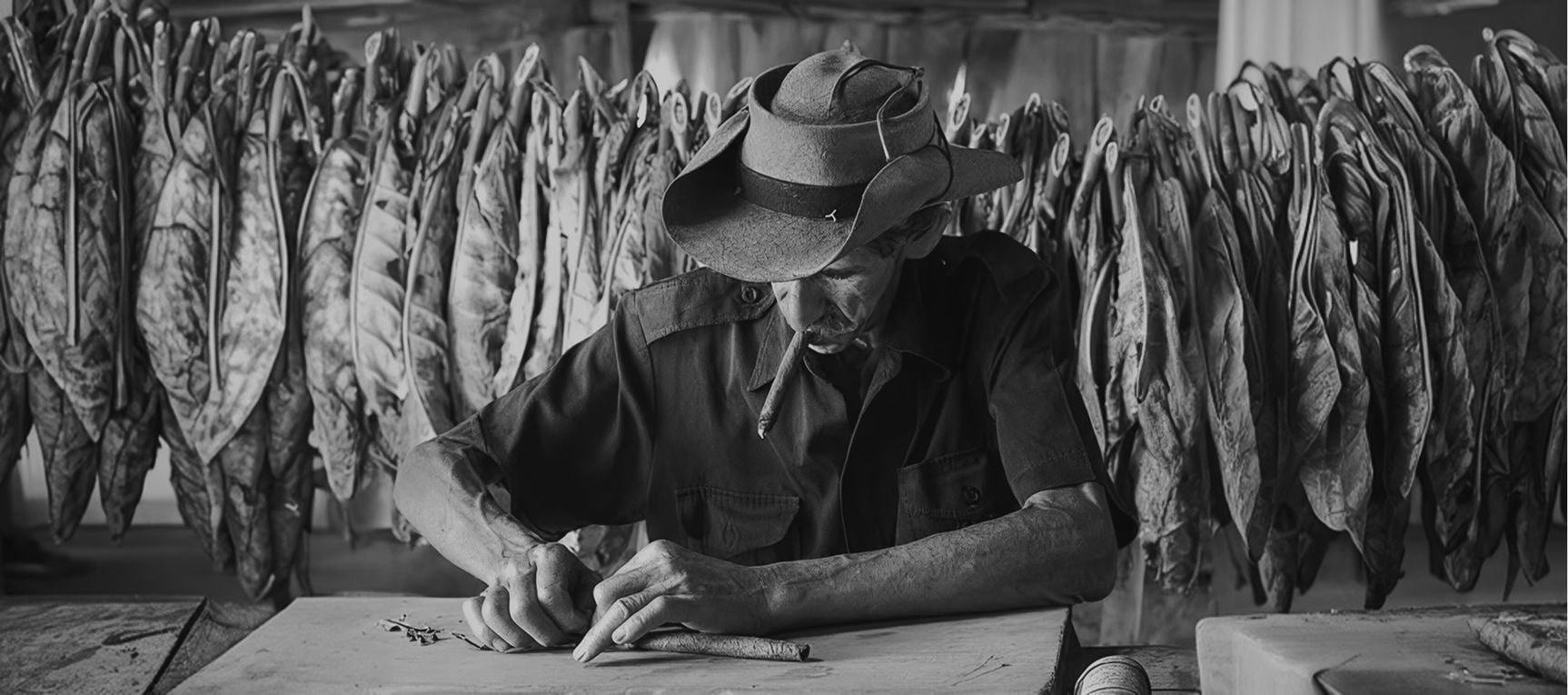
A real torcedor works only at a special table — no "rolling on the thigh"
Bonus Content: Two Beautiful Legends
We have two stories for you that are not so much myths but legends. They do not claim documentary accuracy, but they are very beautiful and we thought they were worth sharing.
Where did the cigar band come from? It is said that Queen Elizabeth II (according to another version, Queen Victoria) liked to smoke cigars in white gloves. Not to soil her gloves, she tied a ribbon around the cigar. Producers liked the idea and started decorating their cigars with branded bands.
Where did cigar boxes come from? Previously, cigars were sold simply in bundles of 25 - this was called a "bundle." The Upmann brothers, owners of the famous H. Upmann brand, worked in Germany and Cuba. They often gave cigars to business partners as gifts, but giving just a bundle was inconvenient - the cigars got crumpled and spoiled. Then they came up with the idea to pack the gift in a beautiful wooden box. The idea caught on, and soon all producers adopted this standard.
In conclusion, we want to emphasize once again that cigar culture is about respect. Respect for the product, for the masters, for yourself. If you store cigars correctly and don't believe stereotypes blindly, every encounter you have with a cigar will bring true pleasure.
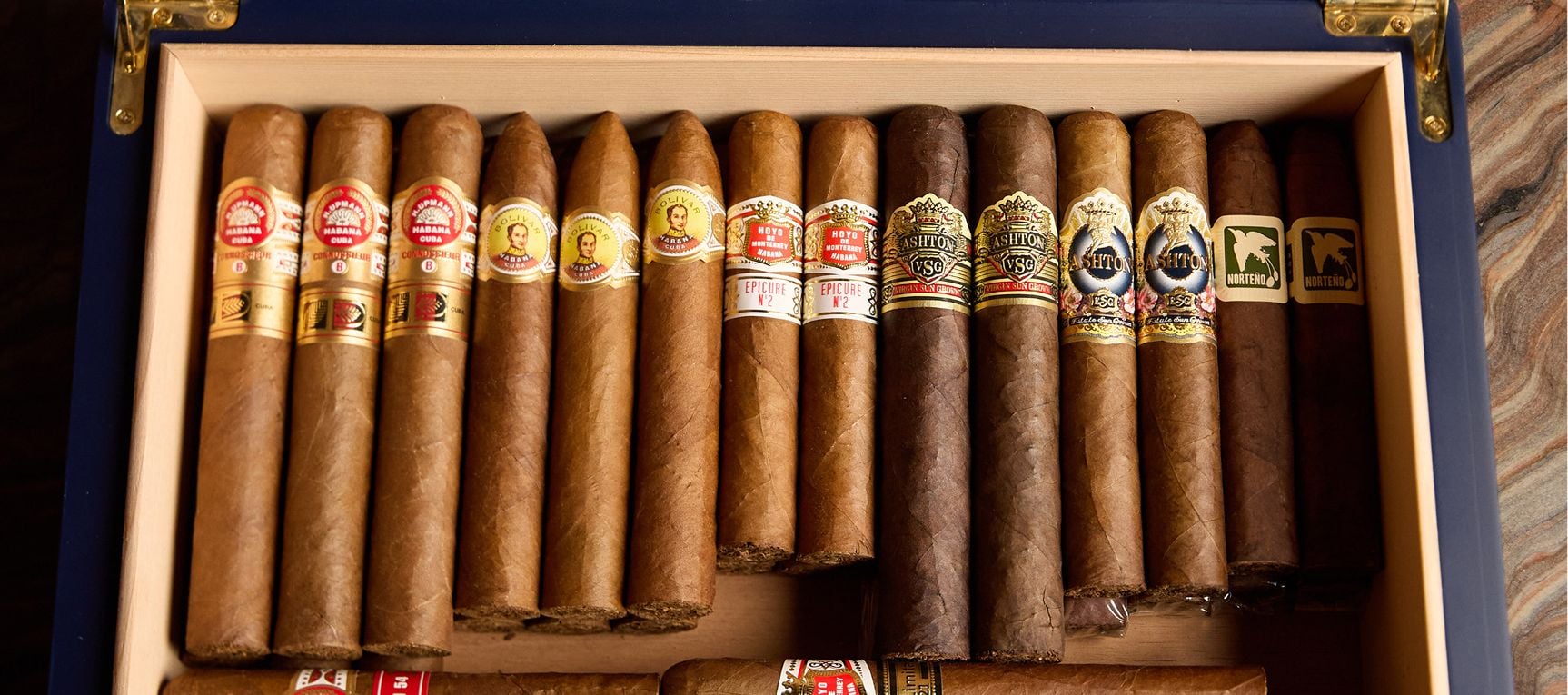
Every band is a story, a tradition, and the character of an individual brand

SUMMARY
Recommended
All articles
To seriously discuss cigars, it's worth mentioning at the start that they are surrounded by a multitude of myths and stereotypes. Cigars are a living, interesting product with character, and although mentioning them often conjures the image of a distinguished man in a leather armchair with a glass of whiskey, contemplating something great in clouds of smoke, in the modern world, it's enough to simply be a hedonist to enjoy the taste.

So, the cigar is chosen and purchased. Now the most interesting part begins - the ritual. For your first encounter with a cigar to leave only pleasant impressions, it is important to follow a few simple but essential steps. This guide will walk you through the entire journey - from unwrapping to the "dignified death" of the cigar.
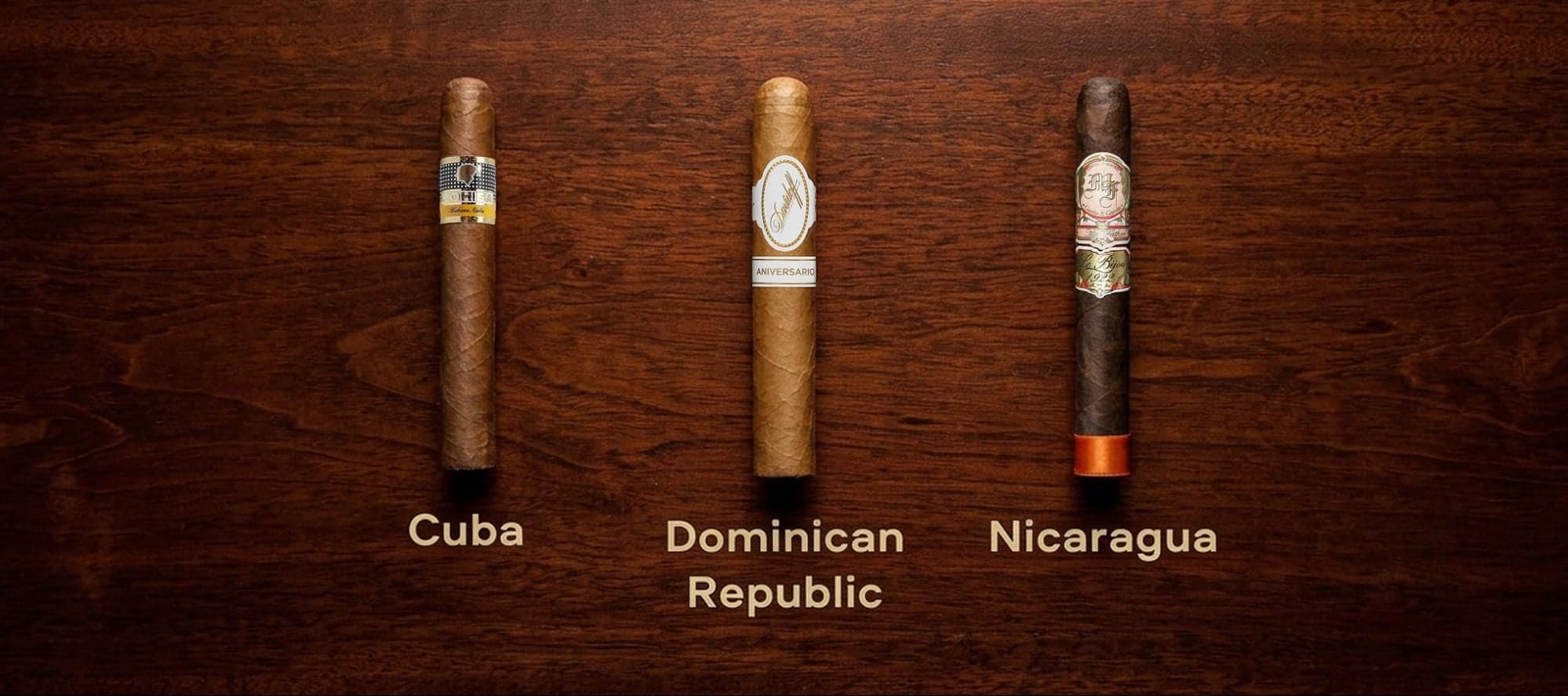
In this lesson we will find out how cigars from different countries differ, and also learn the difference between strength and body.
